Precious Metal Refine Machine: Turning Electronic Waste (E-Waste) into Gold
Electronic waste is no longer just “trash”—it’s a hidden gold mine. Every discarded circuit board, smartphone, and computer motherboard contains valuable precious metals like gold, silver, platinum, and palladium. The challenge? Efficiently recovering them at scale.
This is where the Precious Metal Refine Machine comes in. Designed to extract high-purity metals from complex e-waste, it transforms waste into wealth with recovery rates reaching up to 99%. As global e-waste continues to grow rapidly, this technology is becoming a critical solution for both environmental protection and industrial profit.
In this article, we’ll explore how this machine works, why it matters, and answer the most frequently asked questions about turning electronic waste into precious metals.
What Is a Precious Metal Refine Machine?
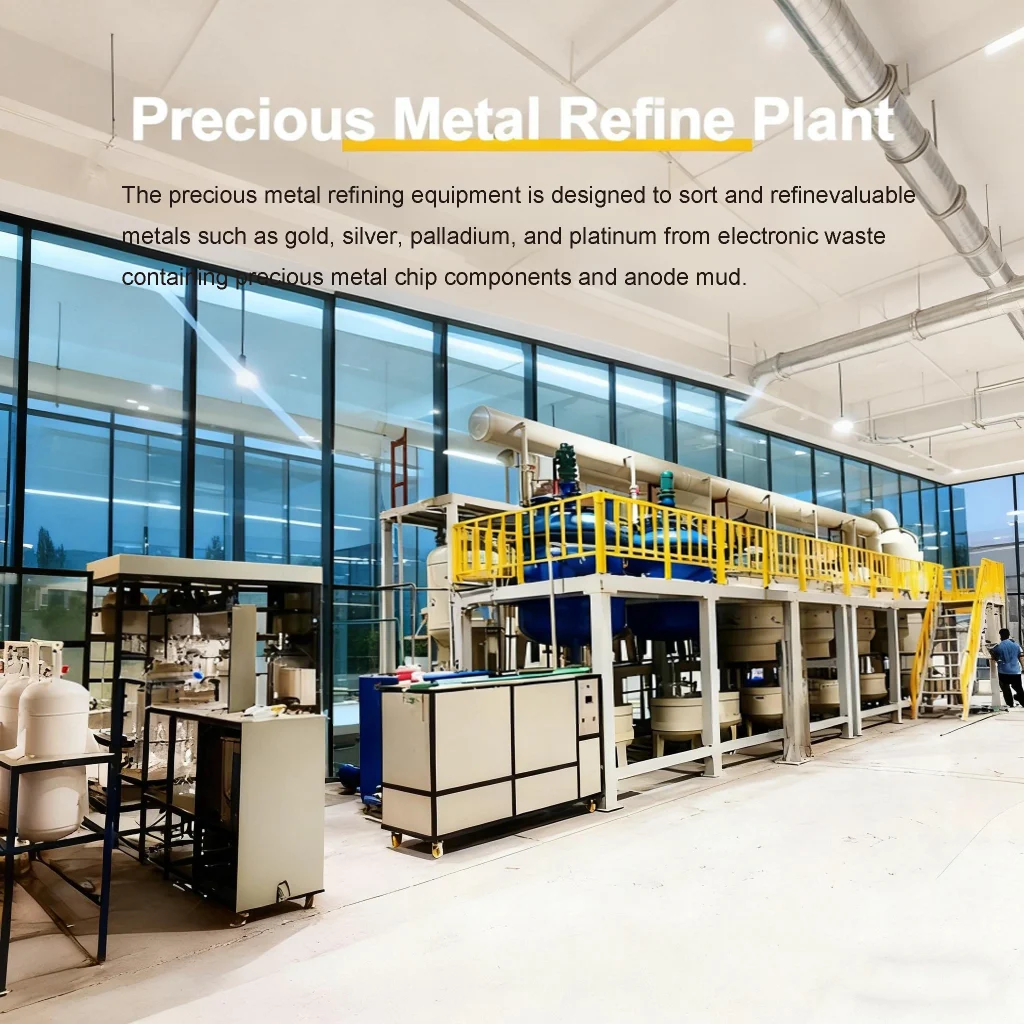
A Precious Metal Refine Machine is an advanced industrial system used to extract and refine precious metals—such as gold, silver, platinum, and palladium—from electronic waste materials like PCB boards, chips, and electronic components.
Instead of relying on outdated manual or chemical-heavy methods, this system integrates thermal treatment, hydrometallurgical processing, and multi-stage separation to achieve high efficiency and environmental compliance.
How Does the System Work? (Step-by-Step Process)
The refining process is highly structured and engineered for maximum recovery efficiency:
1. Carbonization & Grinding Stage
E-waste is first processed through carbonization, where non-metallic materials like plastics and resins are removed. After cooling, the remaining material is ground into fine particles for easier extraction.
2. Hydrometallurgical Extraction
The ground material enters a hydrometallurgical system. Here, precious metals are selectively dissolved and separated from other components using controlled chemical reactions.
3. Multi-Stage Refining & Reduction
Through multiple refining stages, metals are purified and reduced into high-grade alloy blocks. This step ensures maximum separation efficiency.
4. Waste & Emission Treatment
All wastewater is treated before discharge. Exhaust gases are processed using ozone absorption systems, ensuring compliance with environmental standards.
Why This Machine Is a Game-Changer
The global e-waste market is growing fast—over 50 million tons of e-waste are generated annually worldwide, and only a fraction is properly recycled. Inside this waste lies billions of dollars worth of recoverable metals.
The Precious Metal Refine Machine solves three critical problems:
- Resource shortage: Recovers high-value metals from waste
- Environmental pollution: Reduces toxic chemical disposal
- Economic inefficiency: Converts waste into high-value raw materials
With recovery rates of 98%–99%, this system turns what was once waste into a highly profitable resource stream.
Key Features That Make It Stand Out
- Ultra-high recovery efficiency: Gold, silver, platinum, and palladium recovery up to 99%
- High purity output: Metal purity reaches 99%
- Fully automated system: Reduces labor cost and human error
- Eco-friendly process: Cyanide-free hydrometallurgical method
- Energy recovery potential: Tail gas treatment can generate usable chemical byproducts
- Strict environmental compliance: Meets national emission standards
Technical Overview
- Model PMR-100: ≤100kg/day, 135KW, recovery ≥98%-99%, purity ≥99%
- Model PMR-300: ≤300kg/day, 315KW, recovery ≥98%-99%, purity ≥99%
These models are designed for both small recycling plants and large-scale industrial operations.
Frequently Asked Questions (FAQs)
1. What types of waste can it process?
It mainly processes PCB boards, electronic chips, mobile phone boards, and other e-waste containing precious metals.
2. Is the process environmentally safe?
Yes. The system uses a cyanide-free hydrometallurgical process, and all exhaust and wastewater are treated before release.
3. What is the recovery rate of gold and other metals?
The recovery rate can reach 98%–99%, depending on the raw material quality.
4. How pure are the recovered metals?
The final output purity can reach up to 99%, suitable for industrial reuse or resale.
5. Is it fully automated?
Yes. The machine is designed for full automation, significantly reducing manual labor requirements.
The Business Opportunity Behind E-Waste Refining
What makes this technology especially attractive is not just environmental impact—but profitability.
- 1 ton of circuit boards can contain up to 200–300 grams of gold
- Silver content can exceed several kilograms per ton
- Platinum and palladium further increase value density
As raw ore mining becomes more expensive and environmentally restricted, e-waste recycling is becoming a strategic alternative resource industry.
Environmental Impact: Turning Waste into Circular Value
Traditional mining damages ecosystems and consumes massive energy. In contrast, Precious Metal Refine Machines support a circular economy model:
- Waste → Resource
- Pollution → Controlled emission
- Cost center → Profit center
By integrating ozone treatment systems and wastewater recycling, the entire process aligns with modern sustainability goals.
Conclusion
The Precious Metal Refine Machine represents a powerful shift in how we view electronic waste. Instead of treating discarded electronics as garbage, this technology transforms them into valuable precious metals with high purity and efficiency.
With recovery rates approaching 99%, automated operation, and eco-friendly processing, it offers a rare combination of profitability and sustainability. As global demand for precious metals continues to rise, this machine is not just equipment—it is a gateway to the future of urban mining.